Showing posts with label lit. Show all posts

Wednesday, 3 June 2015

Top University Reads: First Year


Behold, my first year as an English Literature student has ended. Although this means hours slaving over essays are over, and cramming for exam season is a thing of the past (for now), I have read some absolutely amazing texts this year that I would have never touched before doing this degree. If there's one thing that is invaluable about an English Lit degree, it's that I've become so much more open-minded literarily, and some of these new favourites have truly revolutionised the way I think about the world around me (which is what you would like literature to do really).

So below is a list of the favourite texts I've studied this year and why you should read them too:


1. The Magic Toyshop by Angela Carter

One of the first books I studied this year and tells the story of young teenager Melanie who unexpectedly becomes orphaned and must move in with her uncle and his new, strange family in the countryside. The novel is fantastical, feminist and outrageous. If you've read Carter before, you might have an idea what kind of tone this novel is, but it retains a sense of reality whilst intermixing just the right amount of Magical Realism. The narrative presents a beautifully raw coming-of-age where the ambiguous ending forces you to question today's society; especially for a young woman.


Friday, 24 April 2015

Book Review: THE UNBECOMING OF MARA DYER

Source Photo and Cover Art: http://www.heatherlandis.com/


The Unbecoming of Mara Dyer: the beautifully-covered, hauntingly-mysterious cliché-parody. Michelle Hodkin's bestselling primary novel of the Mara Dyer series tells the story of young sixteen-year-old Mara, whose friends' untimely deaths shock her into psychological trauma, forcing herself and her family into a new life. Once they all settle into a new place, Mara cannot shake the doubt, guilt and uncertainty that plagues her daily. Now nothing is certain; everything a question.

Friday, 2 January 2015

Top 5 Books Read in 2014


2014 was a successful year for reading. I finally completed the 50 books challenge, total books read coming to 62. This was also the first year I started participating in readathons which really helped bump my book count up, so I plan to do some more of these next year. I also started my degree in English Literature where I can finally dedicate all of my time to appreciating the beauty of words. So for my list of the top 5 books that I read this year:


5. The 5th Wave by Rick Yancey

This is one of the first books I read this year and it absolutely blew me away. You can read my full review here. The concept was very well done; an alien invasion which develops into a complex and harrowing series of events. My main reason for having this book on my list is how well Yancey wrote the action. It was simultaneously exciting, fast-paced and nerve-racking. The only problem I had with it was one of the narrators' voices, which irritating at first, was quick to get used it. All in all, it was one of those books which you spend the entire day waiting for when you have another free moment to read it.

Sunday, 3 August 2014

A Place To Visit : Hay-On-Wye


Recently, I went with a friend to visit the beautiful town of Hay-On-Wye, known colloquially as the "town of books". With over 25 secondhand bookshops as well as antique shops filled with all types of odd memoriabilia, there were no dull moments there. I was thoroughly delighted and used the holiday as an excuse to indulge in book-buying. 

The town itself is absolutely gorgeous. Old houses terraced next to one another, crowded with windows and doors and uneven ground. It was surreal seeing so many independent bookshops in one place, all of them surviving amongst one another with the ability of all being individual and specialised. The town did previously have over fifty bookshops, but economic troubles have led to a drop in numbers and yet it was still humbling to see the town pride itself in the traditional form of literature.


From the book-buyers perspective, the place was absolute heaven. The bookshops spanned from Children's Literature to Vintage books, to poetry and crime. Each bookshop tended to have it's own theme, making the shopping experience in every single one different. Inevitably, this meant that there was such a wide breadth of choice and it would have been hard not to be able to find a book you were looking for. However, I think Hay-On-Wye would be experienced best from aimless browsing and a willingness to explore and discover hidden gems. Not only were all the books beautifully quirky and lovingly read, but they were all at fantastic prices. Even brand new books were being sold at these independent bookshops at half the price. So not only are you buying cheap books, but you also feel like you're helping out a good cause. 

So here's the haul of books I bought, including many that were spur-of-the-moment choices which I find the most exciting:


- Primal Solutions (Poetry Anthology) : Norman Jope
I found this beautiful little poetry book in the first and largest bookshop that I went to. There was a small "ephemera" section with loads of small booklets that were one of a kind. This poetry book is not a reproduction but an original with pencil markings and corrections all over. I loved how unconventional this is and the poetry itself is beautiful.


- Breakfast of Champions : Kurt Vonnegut
I've always wanted to read a Vonnegut and heard that this one was supposed to be rather light-hearted and humourous. It was also the only new book I bought but was still a great price. I really like the Vintage Classics editions so I was really pleased to pick this up.


- Bits of Paradise : F. Scott & Zelda Fitzgerald
I'm really excited about this one. I adore Fitzgerald and when I learnt that a lot of his inspiration derived from his wife, I was intrigued to finally be able to read her credited work as well as both of theirs alongside one another. Moreover, I've been meaning to delve into more short stories as they usually have a more intense moral and storyline within the abridged length. This seemed perfect.


- 1984 : George Orwell
I read this so long ago and felt like this classic deserved a re-read with fresh eyes. This edition as well is so gorgeous and matches my copy of Animal Farm which was next to impossible to resist.


- Mrs Dalloway : Virginia Woolf
Having borrowed this book from a library a while ago, I needed to buy a copy after really liking it. I also needed to have a copy of this book for university, so I definitely managed to kill two birds with one stone.


- The Chrysalids : John Wyndham
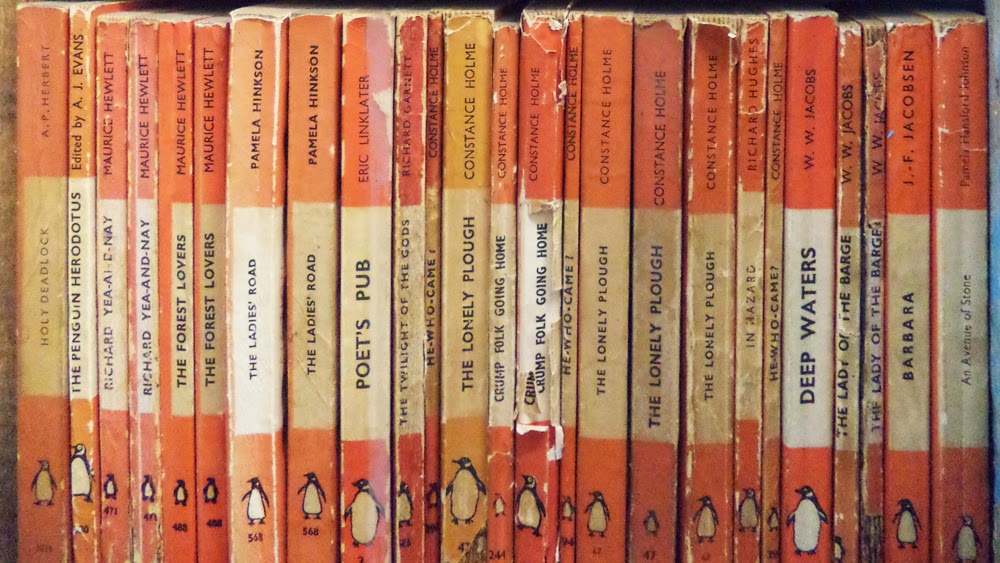
I already own The Midwich Cuckoos which I am guiltily yet to read although I bought it ages ago. I've heard The Chrysalids tends to be more popular so it would be a good one to start off with. The premise sounded interesting and a little creepy which sounds right up my street. Psst, I also really wanted an orange Penguin Classic and couldn't leave Hay without one, so here it is.

Friday, 18 July 2014

Book Review: WE WERE LIARS by E. Lockhart


(This review contains spoilers throughout.)

I like to think that books can transport a person, not just into a different world, but into a different person. Books are their strongest when you can feel yourself become the protagonist, become the narrator and essentially adopt every facet of their life. That is exactly what We Were Liars did. E. Lockhart shapes an extraordinary novel amalgamated from pure mystery and frustration as Cadence Sinclair, our narrator , attempts to finally unearth the secrets of the forgotten summer when she was fifteen years old. Spending year after year on the private Beechwood Island with the extended Sinclair family, Cadence is now seventeen and has forgotten all the details of that summer. She knows something important, something crucial, is missing. And yet her entire family refuse to tell her the truth. This novel excels at showing her journey of self-discovery as she speculates, realises and is forced to survive with the stark horror of that truth.

We Were Liars at its simplest, is about family. In this case, it is the abundant, wealthy and beautiful Sinclairs who are established as significant right from page one, where an ornate family tree outlines three generations of them. Immediately the book installs the themes of aristocracy and lineage. Chapter One is dedicated entirely to describing this family, seeming to be of nothing bad, a family bred out of perfection and success. The unadulterated nature of this family is too sinister and slowly, the imperfections leak out at turbulent speeds. One of my favourite aspects of this novel was Lockhart's effortless way of portraying family dynamics. It is complicated, it is hopelessly frustrating and it is undeniably realistic. A family of that stature would have constant idealisations of inheritance and appearances which seep through every pore of the Sinclairs. It was so interesting to read the three main sisters argue endlessly over seemingly pointless paradoxes of who would inherit the biggest house on their private island, and who would get to keep the ivory ornaments once their parents died. It was so dark and so materialistic to read. Another interesting element of the family dynamic were how the mothers would scheme and perform constant passive aggressive acts of declaring their worth by using their children. The children became puppets to goad and beg to their grandfather for money without knowing why they were doing it. Even from personal experience, parents can mould you into something that looks shiny and kind just so other parents and other people can be jealous of your obedience. But with the Sinclairs, this was amplified to the maximum. Family became so much more powerful.

Friday, 4 July 2014

Book Review: GONE SERIES by Michael Grant


Michael Grant's six-part Young Adult series follows a beach-side community that find themselves in an impossible situation. Everyone aged fifteen and over simply disappear. No spectacular disappearance, no poof. Just gone. Perdido Beach and the surrounding area is now a strange town stuck in a large sphere where only the young roam, looking for food, looking for attention and looking for answers. The six novels follow the array of problems these children eventually face. The initial disruption; the hunger that eventually follows their limited supply of food; conflict and political strife that falls upon the children; illness and plagues; and eventually what happens when the barrier comes down. And if there weren't enough problems, their community is evolving in a rapid way. Animals and nature are changing. Humans are developing paranormal abilities. Nothing is the same. In particular, Grant explores the dynamics between and within these youths on the cusp of adolescence as they try to make sense of a world without adults, and more importantly, without rules.

I picked up the first book on a whim. I saw these books around my local library for ages, with the first instalment having been published in 2008 and I recently heard a bit of a buzz around them so I finally decided to give this series a go. I am so glad that I did. Grant has entertained me, moved me and captivated me throughout the journey that is this series and there was such a large spectrum of wonderful elements to delve into.

Tuesday, 20 May 2014

Readathons: Bout of Books Wrap Up


This week, I decided to take part in the Bout of Books 10 Readathon to get a good chunk of my TBR pile finished. Luckily the weather has been fabulous this week, so in celebration, here are some sunny photos to go alongside some small reviews of my initial thoughts after finishing them:


1. Ender's Game by Orson Scott Card

I've heard many good recommendations about Ender's Game which made me rather excited to pick it up. I had already started and read about half of this book before the readathon started, but had only been reading it in small chapter increments so wanted to get it finished. Normally, I'm not really a fan of sci-fi and I feel as if I were more engaged in that genre, I may have enjoyed this novel more. Saying that, the characters were very well developed and the interesting perspective from such a young but mature mind was engaging to read. However, I did find that certain areas of  the plot dragged a little and the book didn't stay with me for long after I had finished.


2. How I Live Now by Meg Rosoff

I watched the film starring Saoirse Ronan a few months ago and really liked the gritty and yet intimate style of the plot. Being faithful to the books of movie adaptations, I felt obliged to read this novel. I hadn't had a very tight history with reading Rosoff as I've never fallen in love with the other books of hers I have read. However, there was a real profoundness in this one which I can't really explain. I think a lot of its appeal has to do with the "stream of consciousness" narrative style which heightened the reliability of the protagonist and realism of the events. How I Live Now felt like a very realistic telling of a hypothetical war that didn't sugar-coat or gloss over much. It  was what I believed a teenager would think and react to something like that. It was paced well, the characters were solid and I really enjoyed the discreet but haunting themes of materialism and societal dishonesty in the background.


3. A Monster Calls by Patrick Ness

I didn't know what I expecting from this book before I picked it up but the result was tremendous. The book is a short one, divided by beautiful illustrations and equally beautiful prose. Reading it in one sitting, I was moved through plenty of emotions as this book took me on a mental journey through the eyes of a 13-year-old boy. The narrative was impeccably paced and cleverly metaphorical; it really reminded me of Rowling's The Tales of Beedle the Bard. Although the writing itself is simple, the resonance and weight whilst reading definitely wasn't. In a way, the themes were mature and innocent at the same time which just made this amazing piece of fiction even more compelling. Definitely one of my new favourites.


4. Jane Eyre by Charlotte Brontë

This has been a long time coming. Loads of my friends and book bloggers/youtubers recommend Jane Eyre as one of the best Victorian Romantic Classics around and arguably the best Brontë novel. I started this one nearly half a year ago and thought that this readathon would be a good time to finally finish it. The plot did start off very slowly. I languidly forced myself through the entirety of the boarding school section. However, once the plot started to pick up, I thoroughly enjoyed it. Victorian Literature isn't my favourite genre so I didn't think it was exceptional, but it is definitely one of the better ones. Namely, this is because it isn't as tragically depressing as others of this era (I'm looking at you Tess of the d'Urbervilles) but the characters were rich and I really liked the ending.


5. Plague by Michael Grant

I only managed to read half of this one before the week was over, by I'm enjoying it so much. It was so nice to jump back into the world of the FAYZ after so long, and I'm excited to reach the conclusion. Grant's writing is fully-commendable as he has this brilliant way of writing such realistic fiction that swaps between perspectives with ease. I really admire the fact that he doesn't shy away from violent or gruesome scenes in the name of realism. Can't wait to finish this.

All in all, the Readathon was very successful, although I could have used a few more hours here and there for reading whilst I was procrastinating. I'll definitely be doing more of these in the future. So watch this space.

Total number of books finished: 4
No. of pages read: 1023

Sunday, 18 May 2014

Book Review: KNOTS by R.D. Laing


Knots is a short, simple but deeply profound book. It explores the core thoughts and emotions behind human interactions and succeeds at delivering a painfully truthful portrayal of what everybody thinks before they speak. It is considered "pyschology poetry" which I whole-heartedly agree with. The poems within this anthology are extremely repetitive and end up going around and around in seemingly pointless circles. However, these circles begin to show clarity. Within the repetition after repetition, everything becomes so blindingly clear. Laing has a spectacular way of explaining the unexplainable thoughts we hold about others and what we believe they are thinking. These states of mind and passing musings are always present in our minds but Knots is the first time I have managed to find them captured on paper.

First delving into this poetry book is difficult. The sentences and stanzas refuse to make sense unless they are read several times first. But once you get into the style and mind frame of the writer, everything suddenly clicks into place. The ridiculous and tenuous style of writing is made that  much more interesting because it is true. This is how we think. We mull over any and every possible iteration of a situation, whether consciously or unconsciously. As someone who often finds themselves lost deep in my thoughts, this book opened a door of realism and understanding where it was satisfying to finally find something that empathised with my mind. 

This book doesn't necessarily hold any moral outlook. It doesn't exactly hold a plot, a message or  a commentary. Nevertheless, the feeling I was left with after I finished was entirely rewarding by finding sense in this nonsense book. This is one of the most unconventional but mentally exciting poetry books I've ever read and has encouraged me to look at things from a different perspective. I can't recommend it enough.


Saturday, 11 January 2014

Book Review: THE 5TH WAVE by Rick Yancey

This brutal alien invasion novel shows Earth in true apocalyptic hysteria. Foreign species are invading the planet. But not without destroying and annihilating the entire human race first. Filled with countless psychological plot twists and a clever interpretation of human extinction, Rick Yancey excels in 'The 5th Wave'. 


The novel initially follows heroine Cassie Sullivan, a sixteen-year-old survivor of the apocalypse, whilst she recalls the destruction that followed the first four waves: a worldwide powercut; devastating tidal waves, a deathly plague which causes bleeding from every orfice; and disguised killers that look just like humans which destroys the very concept of trust. These methods have killed all but several hundred thousand humans. The population is rapidly decreasing and it is becoming more and more likely that Cassie will be the last of humanity. The reader follows her journey alongside a parallel narrator as they try to make sense of how, why and what is exactly going on. However, the 5th wave is approaching and they are running out of time.


"Cruelty isn't a personality trait. Cruelty is a habit."

I have to congratulate Yancey here for orchestrating a well-paced and engaging action novel which kept me constantly guessing by maintaining high levels of paranoia. The most effective result of this technique was the inability to deduct who the real enemy was. With the characters, you are never certain who to trust and who is telling the truth. The uncertainty that underlies every page is therefore a captivating way of keeping the story fresh and interesting the whole way through. I found 'The 5th Wave' had a similar reading experience to Divergent where the gripping plot-driven narrative encouraged me to pick this book up at any given opportunity just so I could find out what was happening next.

(This review will contain spoilers from this point onward.)

The narrative style was also very effective and the choice of narrators were also very well considered. I have to admit that after reading the first chapter through Cassie's perspective, I did get a little irritated with her voice and wondered whether I could have read a whole book in that way. However, as soon as the perspective swapped to Ben Parish, I was immediately engaged. Getting a drastically opposing focalisation  to Cassie added insight as well as heightened the aforementioned uncertainty. Once the reader begins to familiarise themselves with Ben and view the events through his indoctrinated point of view, the aliens' manipulation feels that much more realistic. 

The dichotomy between Cassie and Ben was also so clever. At the beginning of the novel when Cassie spends many pages describing her obsession with her high-school crush, I sighed and wondered why there was such an emphasis on this frivolous and admittingly irritating detail. I was so relieved to discover his greater involvement in the novel. There is such a great presence of dramatic irony where Ben's bland and cliché high school jock archetype is both fuelled and subverted by his development into a soldier. He becomes a similarly faceless person in a completely different way - and yet through his narration - the reader gets to learn so much more about his background, adding layers and texture to his characterisation. It was so entertaining to read the climax where Ben's and Cassie's story lines collide and the two meet in this unbelievable, almost hyperbolic situation where the coincidence of them meeting again makes the ending so much more enjoyable to read. It also effectively emphasises the personal journeys the two have gone on:  from one high school student sought after another, to two emotionally broken survivors who have been to hell and back. The fact that Sammy is there as a conduit to link the two together even further is brilliant and their maternal/paternal instincts demonstrate how quickly they've had to grow up. 

In my opinion, I found Ben's character arc and journey more interesting to read and I think it was also written better. The tone was more psychologically thrilling to read I really liked the dynamic between all the other child-soldiers within his army squad. I found it important that Yancey wasn't afraid to use very young children and I subsequently found Teacup to be a very interesting character. Additionally, I think the romance between Ben and Ringer was done well as it never felt artificial or forced and didn't interrupt the high pressured plot. 

On the other hand, I didn't really warm to the relationship between Cassie and Evan. I found the first scene of their initial interaction unbelievable as there was that element of insta-love. I'm not sure whether it was just Evan who I never really connected with, or whether it was Cassie's presentation of Evan that didn't sit well. However, as the novel progressed, it got easier to accept the credibility of their relationship, especially when considering Evan's literal and mental division which would lead to foreign feelings and confusion.

I'm intrigued to read the sequel: The Infinite Sea and I cannot fathom what kind of mind-blowing events Yancey will bring to the story next. So watch this space.

Saturday, 30 November 2013

Book Review: MRS DALLOWAY by Virginia Woolf


Wanting to expand my knowledge on 1920s Modernist texts after reading the brilliant The Great Gatsby, I picked up Virginia Woolf's Mrs Dalloway at my school library. Being one of her most well-known novels, Mrs Dalloway was a spectacular introduction into Woolf's effortless and captivating writing style. The narrative follows Clarissa Dalloway through morning and night as she evaluates her lifestyle and past whilst preparing for an elite party. The novel explores internal monologue as the focaliser swaps between each of her guests throughout day as the reader familiarises themselves with the ultimate complexity of the human mind.

One of my favourite aspects of this novel was Woolf's presentation of time. Being a fluid and yet erratic concept, time confuses us all and never ceases to confuse which I believe Woolf captured perfectly. In a Romantic Modernist style, the beautiful lyricism of the prose juxtaposed with the frequent fragmentation of the past and the present creates a startlingly realistic situation as time seems to blur and merge constantly throughout the narrative. Moreover, the motif of Big Ben which illustrates the objective mechanical time of the clock, always appears unexpectedly and throws the reader straight back to the novel's present in that way that we're all familiar with: that the time within our consciousnesses never coincide with the time on the clock face. In doing this, the reader can empathise with the thoughts of the characters in a subtle and effective way where we begin to understand the impact of Clarissa's entangled past with Peter and Septimus' dreadful memories of the war. In true Gatsby fashion, Mrs Dalloway's characters all want to "repeat the past" and return back to the utopian place of hindsight. However, reality triumphs again and again where the slow and at times tiresome pace of the novel really accentuates this inability to escape from the present. 

This theme of unforgiving escapism reappears in the underlying references to death. Clarissa and Septimus fantasise about it and embrace the thought of it which establishes an extremely ominous and profound undertone beneath the frivolity of Clarissa's desire to organise the perfect party.  Even within Peter's mindless opening and closing of a pocket knife the reader is hinted at the possibility of a Romanticism in death. 

"All of this, calm and reasonable as it was, made out of ordinary things as it was, was the truth now; beauty, that was the truth now. Beauty was everywhere."
The technique of essentially swapping narrators every few pages was one of the most interesting aspects when reading the novel. There was a mixture of elegant naturalness - where the change in perspective was so seamless that the monologues passed on without me noticing - and intense confusion where I had to flick back a few pages just to check who was thinking. This combination may have been accidental or intentional but I thought it was effective in making me concentrate better on each characters' personal voice. It also emphasised the similarities in everyone's worries. A lot of the characters had unlikely correlating thoughts which was interesting to show the extent of similarity between unconnected people. It made me wonder: who else is thinking what I am thinking? Who else has the same stress and worry and confusion that I face?

Furthermore, being able to see the world through the eyes of every mentioned character was exciting as it created this paradoxical effect where everyone was connected and yet all were isolated. Although the book followed nearly every combination of relationship such as husband/wife, mother/daughter, teacher/student, doctor/patient, the interactions between the characters paled in comparison to the internal interactions the characters had with the reader. The power of uncontrolled unconscious thought really showed through Mrs Dalloway and was highlighted even further through the absence of chapters. Overall, Mrs Dalloway felt continuous, textured and above all, real.


Wednesday, 14 August 2013

Book Review: THE COLLECTOR by John Fowles


Having initially spotted this book on the floor of a dusty second-hand bookshop in London, I was intrigued by the storyline. Being a firm supporter of libraries, I refrained from buying the £3 book and checked it out first.

The Collector pieces together the dissociated tale of an estranged captor and his captive against the backdrop of a secluded country cottage isolated from society. Here, Frederick Clegg, a collector of butterflies and an obsessive of beauty, becomes increasingly fascinated by another similarly beautiful creature. Turning his fantasy into reality, Frederick holds Miranda hostage in a house made just for her as he caters to her every wish except for her strongest desire: to be set free. The two struggle to coexist as tensions build and the two thirst for escape and restraint.

The element of excellence in this novel was Fowles' ability to depict parallels and oppositions within the two central characters. Like the art and fiction they discuss, Frederick and Miranda consistently defy and dispute. In Frederick's desire for a more romantic situation, he lovingly names himself the 'Ferdinand' to his Miranda to only have it backfire in his face as he becomes her 'Caliban' instead. Like The Tempest itself, the couple come from completely different backgrounds; the female taken by surprise. Miranda, in contrast to Frederick, prefers the harsher The Catcher in the Rye, baffled when Frederick doesn't understand its appeal. The same applies when they discuss and practise art. Frederick takes photographs: quick and calculated . Miranda, on the other hand, loves to draw and allow herself to express her emotions through sketching. However, the stark initial differences between the two begin to slowly dissipate as Miranda begins to lose her identity. Interestingly, it is in her drawing that this begins to be apparent in as she slowly loses her style causing her to copy the works of existing artists. She gradually begins wearing the clothes Frederick buys for her and across time in entrapment, her vigour and personality wan as she is stripped of her dignity. This is where the symbol of Frederick's butterfly collection begins to become significant. The dehumanising character of Miranda could easily be interchanged with his butterflies as she is lifelessly photographed and examined.

""They're dead." She gave me a funny look sideways. "Not these particularly. All photos. When you draw something it lives and when you photograph it it dies."

The narrative style of The Collector is also exciting. The first half is told by Frederick, a somewhat sociopathic man with infantile qualities. He humourously refers to educated people as being 'la-di-da' but this hints at the first signs of this man's inability to empathise and understand. The style of the prose brings the reader right into the mind of the man whilst still remaining artfully distant and critical - reflecting his frame of mind even further. Having the first account of events be from Frederick is notable as he fails to accurately recall Miranda's emotions. Therefore, when the reader is thrust into a diary format of Miranda's point of view, the change is startling and there is suddenly passion and personality in the narrative. The drastic change doesn't just separate the two further but allows the reader (who has become accustomed to Frederick's prose) to become conscious of emotion, making it even more effective. Additionally, the events are retold again from her point of view, so in having to essentially re-read the book again, perhaps Fowles is reiterating Miranda as an inferior character as even the reader is forced to listen to Miranda as a repeat of Frederick; belittling her further. There is also a circular nature in this novel, and in doing this, Fowles in able to relay the events to a broader level of realism as the structure mimics the cycle of a butterfly for example: beginning as an ugly creature which then experiences beauty if not only for a short while.  Only Frederick's actions increase the chances of mistakes being made yet again and again and again.

I have to commend Fowles for convincingly crawling into the mind of a sociopath and how three-dimensional he managed to make the characters.  Regardless of Frederick's detached temperament, we are able to understand why. The book also feels cleverly raw and intimate and therefore creates a tight microcosm; thrusting readers into a type of captivity of their own. The Collector is a curious blend of a fantastical but harsh display of reality.

(And then I found The Collector in a charity shop and purchased it for £1.99. Perhaps there was a sign in that initial restraint.)